
Earring Sizing Explained: Gauges, Millimeters, and What Actually Fits
Oct 27, 2026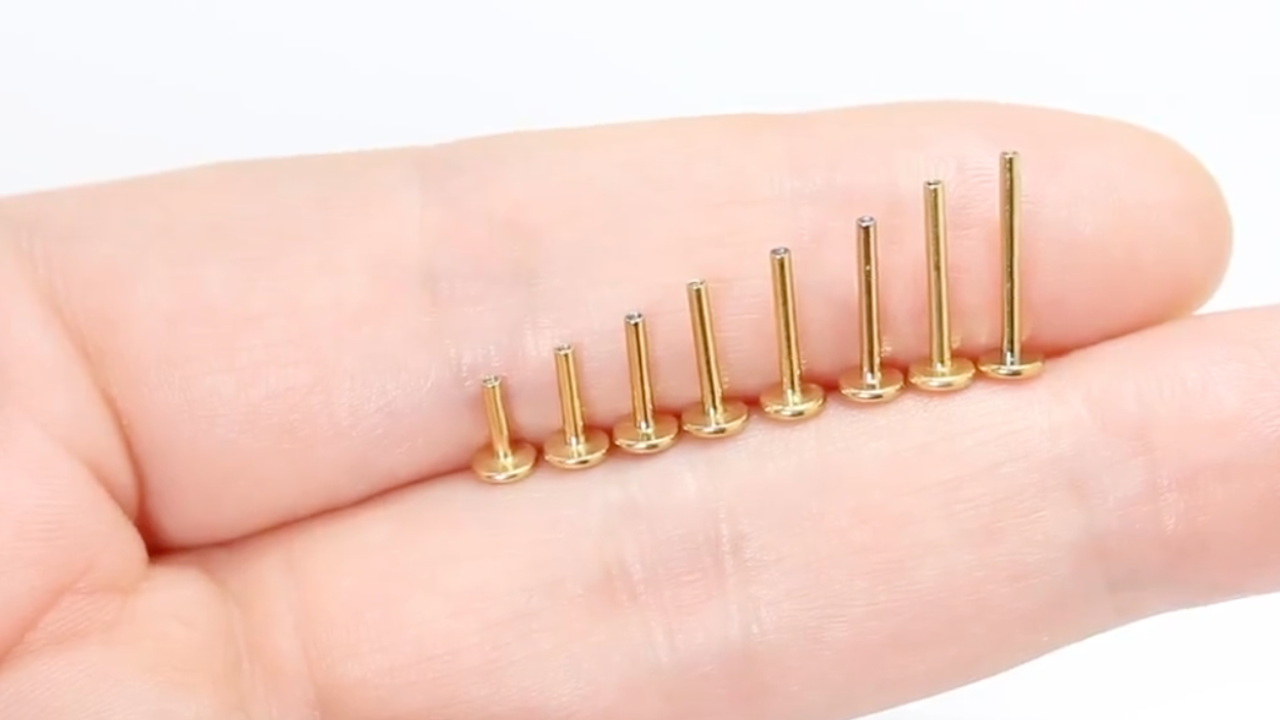
If you've ever stared at an earring listing that says "20g, 8mm, flat back" and thought what does any of that mean?, you're not alone. Earring sizing is one of the most confusing parts of building an ear stack, and it's also one of the most important. The wrong size can mean earrings that won't go in, hoops that sit awkwardly, or posts that irritate a healing piercing.
Here's everything you need to know, in plain English.
The Three Measurements That Matter
Almost every earring comes down to three numbers:
- Gauge: how thick the post or wire is
- Length or diameter: how long the post is, or how wide the hoop is
- Size of the decorative part: the stone, disc, or charm
Let's break each one down.
Gauge: The Number That Seems Backwards
Gauge (often written "g") measures the thickness of the post or wire that passes through your piercing. The part that trips everyone up: the smaller the number, the thicker the jewelry. A 16g post is thicker than a 20g post.
Here's a quick conversion chart:
| Gauge | Millimeters | Commonly used for | |---|---|---| | 22g | 0.6mm | Very fine, delicate jewelry | | 20g | 0.8mm | Standard lobe earrings, fine hoops | | 18g | 1.0mm | Lobes, some cartilage | | 16g | 1.2mm | Cartilage (helix, tragus, conch) | | 14g | 1.6mm | Some cartilage, nostril, larger jewelry | | 12g | 2.0mm | Stretched lobes and statement pieces |
Why it matters: your piercing is made at a specific gauge. If you try to wear jewelry that's thicker than your piercing, it won't fit comfortably, and forcing it can cause irritation or injury. Jewelry that's thinner than your piercing will fit but may sit differently or feel less secure.
What most people have:
- Earlobes: typically 20g or 18g
- Cartilage: typically 16g (sometimes 18g)
Not sure what you have? The easiest way to find out is to check the jewelry you're currently wearing (many pieces list the gauge on the packaging or product page) or ask your piercer.
Post Length: Why Your Healing Piercing Needs Extra Room
Post length is how long the straight part of a stud is, from the front of the earring to the backing. It's usually measured in millimeters.
- 6mm: a snug fit, best for fully healed piercings on thinner ears
- 8mm: the most common all-around length for healed piercings
- 10mm and up: often used for new piercings, because swelling happens
That last one is important. A fresh piercing needs a longer post to leave space for swelling. A post that's too short can get embedded or trapped by swollen tissue, which is uncomfortable and can lead to complications. Once you're fully healed, your piercer can help you switch to a shorter post for a cleaner, flatter look.
If your earring feels tight against your skin, the post is probably too short. If it sticks out or flops forward, it may be too long.
Hoop Sizing: Diameter Is Everything
Hoops are a little different. Instead of post length, you'll see diameter, the width of the hoop, also in millimeters. Common sizes run from 6mm to 12mm and beyond.
- 6 to 7mm: snug and close to the ear, a very "hugging" fit
- 8mm: the classic everyday size, the sweet spot for many lobes and cartilage piercings
- 10 to 12mm: a looser, more visible hoop that dangles away from the ear
One thing to watch for is whether a listing gives the inner diameter (the open space inside the hoop) or the outer diameter (the full width including the wire). A hoop with an 8mm inner diameter will look larger than one with an 8mm outer diameter. When in doubt, check the product description or ask the seller.
Placement matters too. A hoop that fits perfectly in a lobe might feel too big or too small in a helix, so it helps to think about where the piercing is, not just the size you like.
Decorative Size: Stones, Discs, and Charms
This is the "how big does it look?" measurement. Gems and discs are usually sized by their diameter:
- 2mm: tiny and delicate, perfect for a subtle sparkle
- 3mm: a classic stud size
- 4mm: noticeably bolder, great for a focal piece
- 5mm and up: statement territory
When building a stack, mixing sizes is what makes it look curated. A common approach is one larger focal piece with smaller accents around it.
A Quick Word on Backs and Fit
Size isn't only about the post. The type of back changes how an earring wears:
- Flat backs sit flush against the ear and are comfortable for sleeping
- Threadless (push-pin) posts let you adjust length and swap tops easily
- Internally threaded posts have no threading touching your skin, which many people find gentler
Material matters too. Implant-grade titanium and solid gold are popular choices for sensitive ears and healing piercings.
How to Measure What You Already Own
Not sure what sizes you're wearing? Here are a few easy options:
- Check the listing or packaging where you bought the jewelry
- Use a ruler or caliper to measure post length and hoop diameter in millimeters
- Ask your piercer, who can measure and confirm your gauge in seconds
- Book a consult, since a styling session is a great way to get your sizes sorted so every future purchase fits
Quick tip: 1 inch is 25.4mm, so if a listing is in inches, multiply to convert.
The Cheat Sheet
- Lobes: usually 20g or 18g, 6 to 8mm posts, 8 to 10mm hoops
- Cartilage: usually 16g, 6 to 8mm posts, 6 to 8mm hoops
- Healing piercings: start with a longer post and check with your piercer before downsizing
- Lower gauge number = thicker jewelry, so don't force a thicker piece into a smaller piercing
Still Not Sure What Fits?
Sizing is exactly the kind of thing that feels confusing until someone walks you through it once. If you'd like personalized help figuring out your gauges, choosing sizes, and building a stack that suits your ears, I'd love to help. Take a look at my styling consultation options, from a quick Ear Snapshot to a full Styling Session, and let's get you wearing jewelry that fits as beautifully as it looks.
